Synchronized Prize Growth Patterns in Interconnected Slot Networks at Night
Anna Werner · Sep 14, 2026
Synchronized Prize Growth Patterns in Interconnected Slot Networks at Night
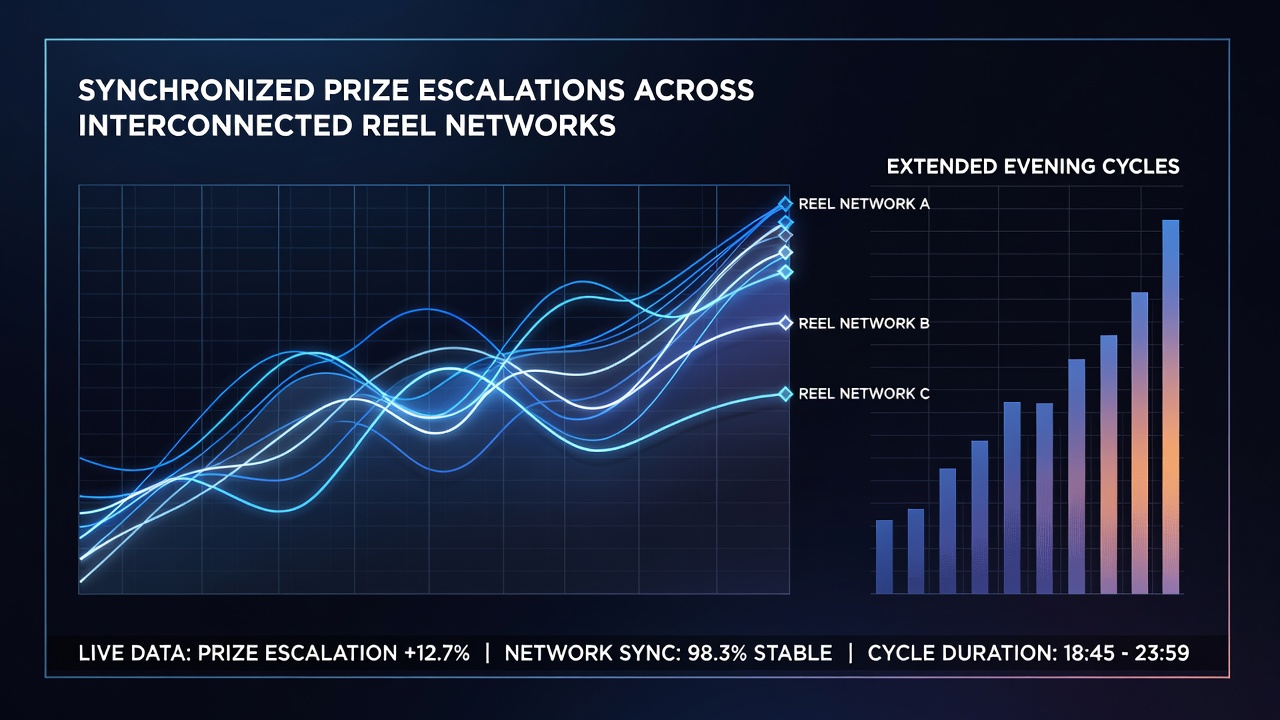
Interconnected reel networks link multiple slot machines across venues or jurisdictions so that each wager contributes to shared prize pools, and these systems show measurable coordination when activity rises after dark. Operators track contribution rates per spin, and data from multiple regions indicate that evening cycles from 6 p.m. onward produce higher aggregate contributions because player volume increases and session lengths extend. Researchers at several gaming laboratories note that the synchronization occurs because the same seed amounts and increment percentages apply uniformly across the linked machines, which creates parallel upward trajectories visible on overhead displays and mobile apps.
Mechanics Behind Coordinated Escalations
Each linked machine deducts a fixed percentage of every bet and routes it to a central progressive meter, while base game outcomes remain independent. When thousands of devices operate simultaneously, the meter updates in real time across all connected terminals, and observers record that the rate of change accelerates once evening foot traffic peaks. Studies from the Nevada Gaming Control Board document average contribution spikes of 18 to 27 percent between 7 p.m. and midnight compared with afternoon baselines, and similar patterns appear in reports covering Australian club networks. The uniformity of the increment rate ensures that separate locations display nearly identical growth curves during overlapping high-activity windows.
Player Volume and Temporal Influences
Extended evening cycles coincide with shift changes, social gatherings, and promotional events that draw larger crowds to gaming floors. Data compiled by the Canadian Gaming Association show that Friday and Saturday evenings generate the steepest cumulative contributions because average bet sizes also rise alongside participation numbers. Analysts examining transaction logs find that machines in the same network often cross identical threshold milestones within minutes of one another when regional time zones align play periods. This temporal clustering produces the visual effect of synchronized prize escalations that players notice on digital leaderboards and in-app notifications.
Observational Data from Networked Systems
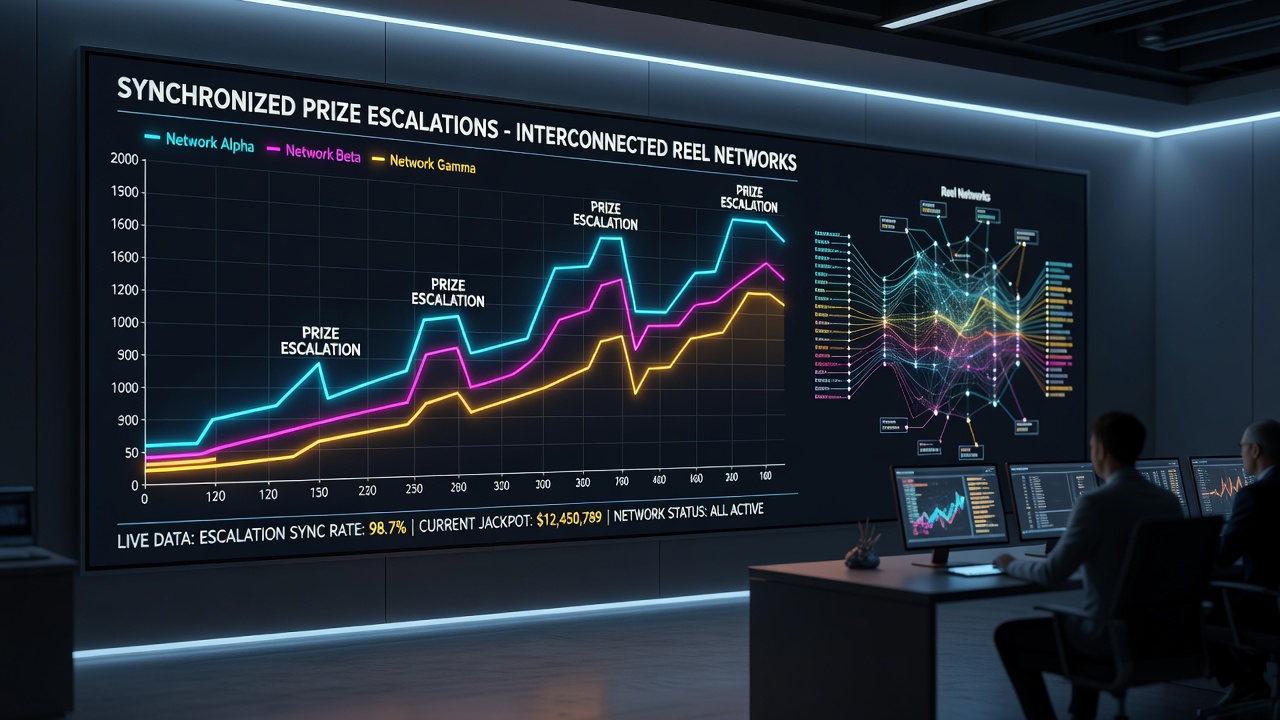
Slot manufacturers publish periodic summaries that aggregate meter activity across wide-area progressives, and figures released in September 2026 indicate continued alignment between contribution velocity and evening player density. One multi-state operator recorded that its network meters advanced at an average of $142 per minute during prime-time windows, compared with $91 per minute during daytime hours. University researchers examining anonymized play data confirm that the correlation coefficient between player count and meter velocity exceeds 0.87 across sampled networks, which supports the observation that evening cycles drive the most rapid synchronized growth. These measurements rely on timestamped transaction files rather than anecdotal reports, allowing precise charting of escalation patterns.
Regional Variations and Network Scale
Larger networks spanning multiple states or provinces display more pronounced synchronization because the larger player base smooths out local fluctuations. Reports from the New Jersey Division of Gaming Enforcement note that wide-area progressives in the northeastern corridor reached record increments during September 2026 evening cycles when tourism volumes increased. In contrast, smaller intra-casino networks show tighter synchronization but lower absolute growth rates because fewer machines feed the meter. Industry associations such as the American Gaming Association publish comparative tables that allow operators to benchmark their evening contribution curves against regional peers, and these tables reveal consistent seasonal upticks once daylight-saving adjustments shift peak play windows.
Monitoring Tools and Display Systems
Modern networks employ centralized servers that push meter values to overhead signs, mobile applications, and in-game displays every few seconds. Software platforms log each update with millisecond precision, which enables operators to generate time-series graphs that highlight the evening acceleration phase. Technicians calibrate these systems to account for latency across wide geographic spreads, and calibration logs confirm that displayed values remain within a few dollars of the true central meter during high-velocity periods. The resulting visual consistency reinforces player perception of coordinated growth even when individual machines are separated by hundreds of miles.
Conclusion
Charting synchronized prize escalations across interconnected reel networks during extended evening cycles relies on transaction-level data that operators and regulators collect continuously. The combination of uniform contribution percentages, rising player volumes after 6 p.m., and real-time meter updates produces parallel growth curves that multiple independent sources have quantified. Observers examining September 2026 figures and earlier seasonal records find teh same temporal patterns recurring across jurisdictions, which underscores the structural predictability of these networked systems when evening activity intensifies.