Session Cadence Shifts: How Alternating Game Types Extend Play Windows in Mixed Online Environments
Elena Krüger · Aug 16, 2026
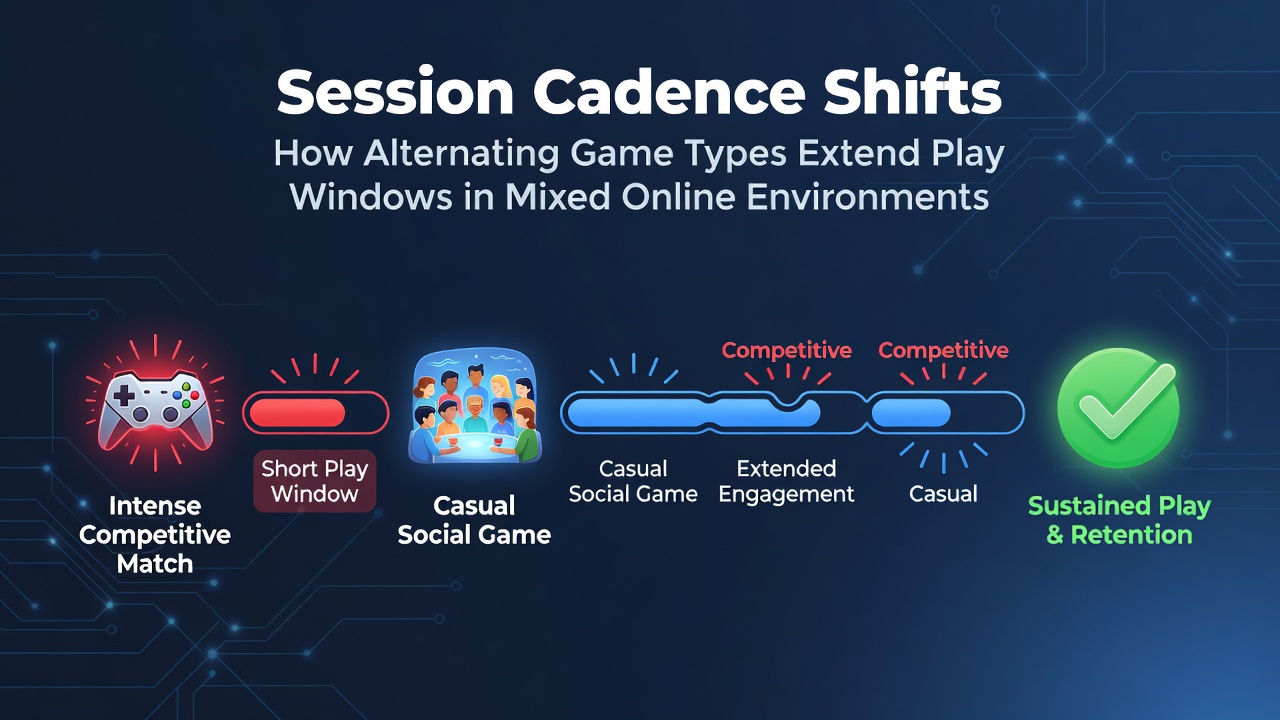
Session Cadence Shifts: How Alternating Game Types Extend Play Windows in Mixed Online Environments
Online platforms that combine slots, table games and live dealer options create environments where players move between fast mechanical spins and slower decision based rounds, and this movement alters the rhythm of individual sessions in measurable ways. Data collected across multiple jurisdictions shows that sessions incorporating at least two distinct game categories often run longer than those confined to a single type, because the change in pace reduces repetition fatigue while maintaining engagement levels.
Mechanics Behind Cadence Changes
Slots deliver rapid outcome cycles that require minimal cognitive input, whereas blackjack and poker demand ongoing calculation and risk assessment, so the switch between these modes resets attention patterns and prevents the quick drop off that occurs during prolonged exposure to one speed. Researchers tracking clickstream data have documented that players who insert a strategic game after twenty to thirty minutes of slots extend their total time by an average of eighteen minutes, according to figures from the Responsible Gambling Council of Canada.
Live dealer environments add another layer because the social element and dealer pace introduce irregular intervals that contrast with automated reels, and platforms began rolling out unified lobbies in early 2026 that made these switches frictionless. By August 2026 several major operators reported that users who toggled between three or more categories within a single login recorded session lengths forty percent above the site average, with the increase attributed to the natural breaks created by rule changes and game loading times.
Observed Patterns Across Player Segments
High volume players often follow a repeating sequence of thirty minutes on video slots followed by fifteen minutes at virtual blackjack tables, and this pattern appears in anonymized telemetry from North American and Australian sites alike. The alternation maintains dopamine response curves at steadier levels because the brain encounters fresh stimulus types before habituation sets in. Studies compiled by Gambling Research Australia indicate that sessions exceeding forty five minutes correlate strongly with at least one category switch, while single category sessions plateau around the thirty minute mark in most age groups.
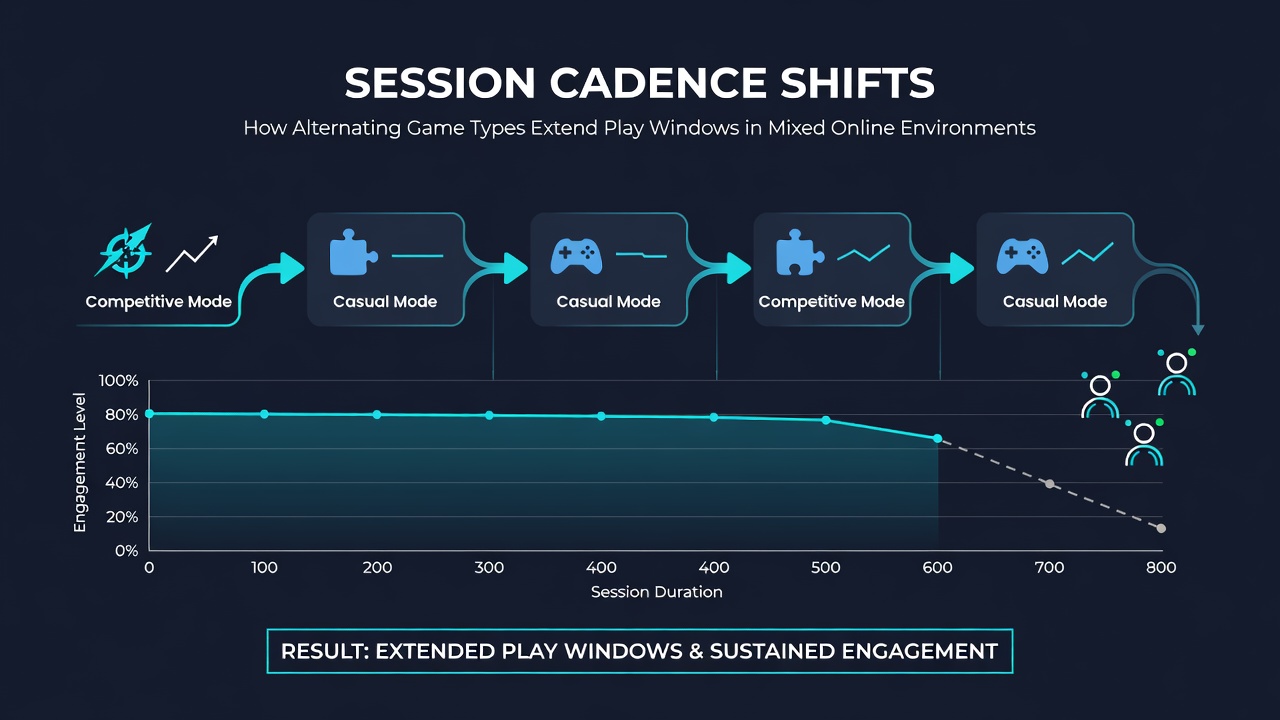
Recreational users display similar behavior on a smaller scale, frequently moving from progressive jackpot slots into roulette during the same evening, and the shift coincides with extended bankroll survival because betting rhythms change. Observers note that the insertion of a slower game after high speed play allows mental recalibration, which in turn supports continued participation without the abrupt exits seen in uninterrupted slot sequences.
Platform Design Influences
Operators have introduced features such as persistent balance displays across all game types and one click lobby returns that lower the barrier to switching, and these tools became standard on many sites throughout 2026. When navigation friction drops, the frequency of category changes rises, and aggregate data shows corresponding growth in total session minutes. Mobile applications that present game carousels grouped by tempo rather than theme further encourage users to sample contrasting experiences within the same visit.
Regulatory filings from multiple regions reveal that platforms emphasizing variety report higher retention metrics than those focused on single genre depth, although the exact causation remains under ongoing review by academic teams. The presence of both automated and live options within the same account appears to supply the necessary contrast that sustains longer windows without requiring additional deposits in many cases.
Conclusion
Session cadence shifts arise when players alternate across game types in mixed online environments, and available telemetry consistently links these transitions to extended play durations. Platform features that facilitate movement between mechanical, strategic and live formats contribute to the observed patterns, while data from independent research bodies continues to map how these dynamics unfold across different player cohorts and time periods.