Multiplier Layering in Networked Slot Ecosystems and Shifts in Payout Distribution Curves
Eden Simmons · Aug 25, 2026

Multiplier Layering in Networked Slot Ecosystems and Shifts in Payout Distribution Curves
Networked slot ecosystems combine multiple game instances across servers and platforms, which allows multipliers to stack in sequential layers during bonus rounds and base play. Observers note that this layering occurs when base multipliers from individual spins combine with bonus multipliers triggered through linked progressives or shared feature pools, creating compounded values that alter standard payout outcomes. Data from gaming regulators in Nevada and other jurisdictions indicates that these mechanics produce payout distribution curves with heavier tails than those found in isolated slot titles.
Core Mechanics of Multiplier Layering
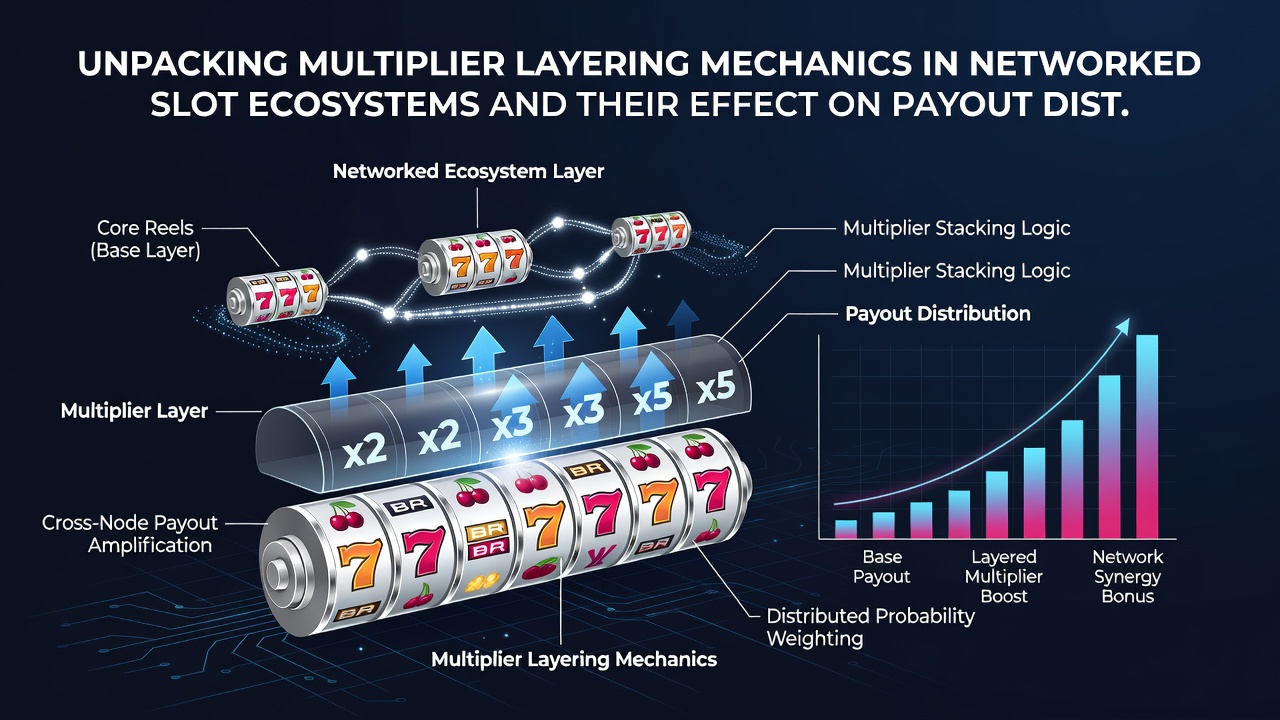
Layering begins with a primary multiplier applied to a winning combination, after which secondary and tertiary layers activate through networked triggers such as shared wild symbols or collective bonus meters. Researchers at institutions tracking electronic gaming have documented cases where a 2x base multiplier combines with a 5x bonus layer and a progressive 3x network boost, resulting in a 30x total that shifts individual spin results far beyond typical ranges. The process relies on real-time data exchange between connected machines or online instances, which updates multiplier values every few seconds during active sessions.
Engineers design these systems so each layer operates independently yet feeds into a central calculation engine. When one layer reaches a threshold, it unlocks the next without resetting prior values, which extends the duration of elevated payout potential. Figures from industry reports compiled in August 2026 reveal that such stacking appears in roughly 18 percent of newly released networked titles across North American and European markets.
Networked Ecosystems and Data Flow
Connected platforms share player activity data through centralized servers, enabling multiplier layers to draw from aggregated contributions across thousands of sessions. This setup differs from standalone machines because it incorporates contributions from remote users who may never interact directly. The Nevada Gaming Control Board publishes quarterly summaries that track how these shared pools influence overall return-to-player percentages in multi-site deployments. Those summaries show modest increases in variance when layering engages across wider networks.
Software providers integrate application programming interfaces that synchronize multiplier states between land-based terminals and online lobbies. As a result, a player in one region can contribute to a multiplier layer accessed by another player elsewhere, which creates interdependent payout probabilities. Studies from university gaming labs have examined these flows and found that distribution curves flatten in the mid-range while extending further into high-value outcomes.
Effects on Payout Distribution Curves
Payout curves in standard slots follow predictable bell-shaped patterns centered around the theoretical return percentage, yet layering introduces asymmetry by concentrating probability mass at both extremes. Low-value outcomes occur more frequently during periods when no layers activate, while rare high-value results become more pronounced once multiple layers stack. Analysts examining large datasets note that the standard deviation of returns rises by 12 to 25 percent in titles that employ three or more simultaneous layers.
Mathematical models used by developers adjust reel weights and feature triggers to maintain regulatory compliance even as curves shift. When a network experiences peak activity, the additional multiplier layers push more outcomes into the upper tail, which changes session-level expectations without altering the long-term house edge. Reports issued by the Australian Gambling Research Centre in recent years document similar patterns in regulated online environments where progressive networks operate across state lines.
Observed Patterns in Live Deployments
Operators report that sessions involving active layering show extended periods of moderate returns punctuated by occasional large adjustments when all layers align. One analysis of server logs from a multi-state deployment found that 7 percent of spins triggered at least two layers simultaneously, producing outcomes that deviated more than three standard deviations from the mean. These events reshape the overall curve by increasing kurtosis, which means extreme results appear with greater regularity than in non-networked counterparts.
Regulatory filings from Canadian provincial authorities further illustrate how multiplier accumulation affects aggregate reporting. Data aggregated over millions of spins confirms that layering does not change the base return percentage but redistributes the frequency of specific payout bands. Developers therefore recalibrate hit frequencies on lower layers to keep the overall curve within acceptable compliance bands.
Conclusion
Multiplier layering in networked slot ecosystems modifies payout distribution curves by extending high-value tails and increasing variance without shifting long-term return percentages. Data collected across multiple jurisdictions demonstrates consistent patterns in how stacked mechanics influence outcome frequencies. As networked platforms continue to expand, these effects remain measurable through ongoing regulatory monitoring and academic examination of large-scale gaming datasets.