From Table Positions to Reel Positions: Transferring Hold'em Awareness to Progressive Jackpot Play
Theo Simmons · Oct 12, 2026
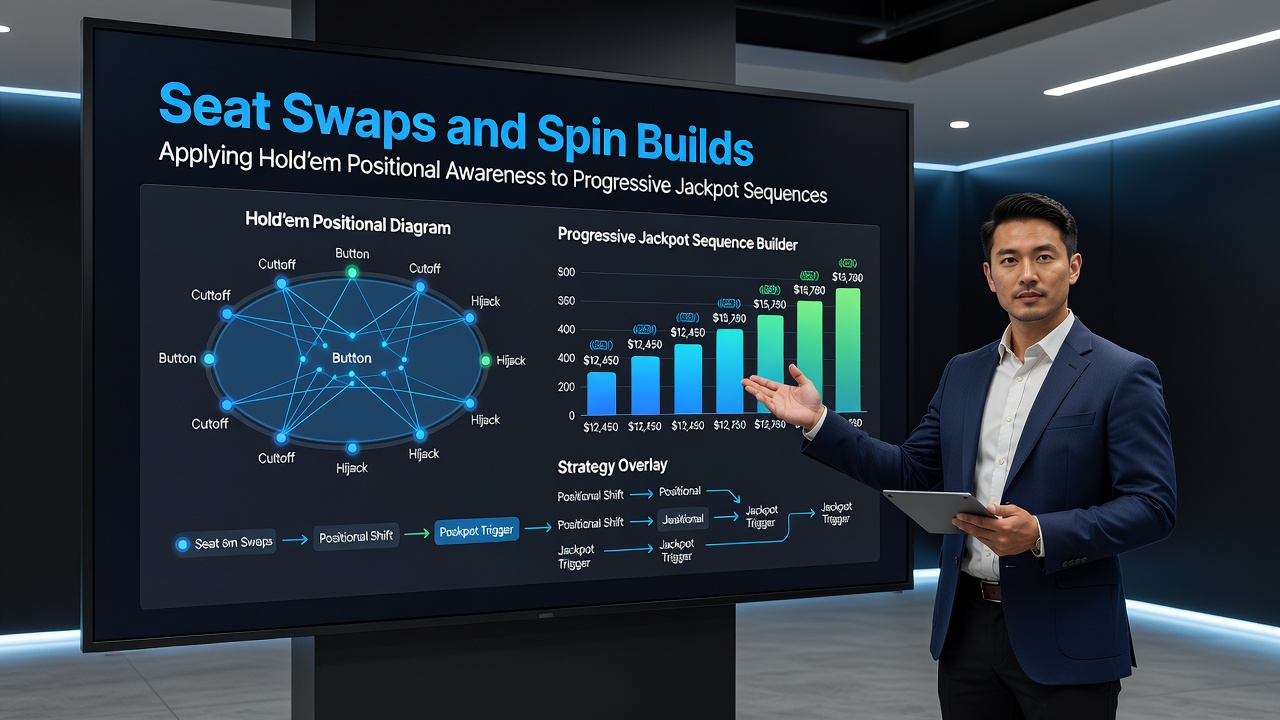
From Table Positions to Reel Positions: Transferring Hold'em Awareness to Progressive Jackpot Play
Players have long examined how table dynamics in Texas Hold'em translate across gaming formats, and recent patterns show growing interest in mapping positional concepts onto progressive jackpot sequences in slots. Research from the National Council on Problem Gambling indicates that structured decision frameworks appear in both poker rings and reel play, particularly when jackpots accumulate across linked machines. Observers note that early position in Hold'em forces tighter ranges while late position allows wider aggression, and similar logic surfaces when participants select which progressive terminals to approach during peak accumulation phases.
Core Positional Elements in Hold'em Rings
Hold'em positions break into early, middle, and late categories, with the button granting the strongest information advantage because action resolves last. Data compiled by the Alcohol and Gaming Commission of Ontario reveals that players occupying late seats win larger pots on average across multi-table tournaments, largely because they observe more opponent tendencies before committing chips. Seat swaps occur frequently in live settings as participants rotate or request table changes, altering their relative position and access to information each orbit.
Those who study these rotations recognize that position dictates range construction and aggression frequency. Early seats demand premium holdings because post-flop decisions happen without full visibility, whereas cutoff and button seats support speculative calls that leverage future information. Figures from the Canadian Gaming Association show consistent correlations between positional advantage and session outcomes across thousands of hands tracked in regulated venues.
Mapping Positions onto Progressive Sequences
Progressive jackpot sequences function through accumulating meters that climb with each wager across networked machines, creating layered opportunities that reward timing and selection. Participants apply positional awareness by treating bank positions or machine clusters as analogous to poker seats, choosing entry points based on meter height, recent payout history, and remaining spin volume. Early-sequence machines, those with lower current jackpots, parallel early poker positions by requiring conservative bet sizing until momentum builds.
Middle-sequence play involves monitoring adjacent terminals for payout signals and adjusting wager patterns accordingly. Late-sequence machines near record thresholds allow broader participation because the potential return justifies wider risk exposure. Researchers at the University of Nevada's gaming studies program documented how players who systematically rotate across progressive banks record different hit frequencies compared with static positioning, mirroring seat-swap effects observed in poker.

Spin builds emerge when consecutive wagers on selected machines increase the likelihood of triggering bonus rounds that feed the progressive pool. Those who track these builds treat each spin cycle like a poker orbit, noting how information from prior outcomes influences subsequent decisions. In October 2026, industry reports highlighted rising interest in software tools that display meter velocity across linked networks, enabling more precise positional choices without violating house rules.
Practical Transfer of Awareness Techniques
Seat swaps in poker often reset dynamics mid-session, and equivalent machine changes in progressive areas allow participants to reposition relative to jackpot growth rates. Studies published by the Australian Institute of Family Studies found measurable differences in play duration and expenditure patterns when individuals deliberately varied their terminal selections rather than remaining fixed. The same research noted that awareness of neighboring activity functions like table image in poker, prompting adjustments in bet size and frequency.
Spin builds gain momentum when players align wager timing with observed cycles, much as late-position raises capitalize on prior folds. External factors such as time of day, machine density, and network linkage strength further shape optimal positioning. Data released by the Gaming Policy and Enforcement Branch in British Columbia indicates that progressive networks with higher linkage counts produce faster meter acceleration, rewarding players who rotate positions to capture peak windows.
Observed Patterns Across Regulated Markets
Across multiple jurisdictions, analysts have recorded how positional discipline appears in both formats through session logs and player interviews. Early-position caution in Hold'em translates to measured entry on lower-meter progressives, while late-position aggression corresponds to increased participation once meters exceed historical averages. Those who apply these frameworks report structured session planning that incorporates rotation intervals and build monitoring, though actual outcomes remain governed by random number generators and house edges.
Regulatory filings from the New Zealand Department of Internal Affairs show steady growth in linked progressive installations through 2026, creating more opportunities for positional experimentation. The same filings document that player education materials increasingly reference cross-game strategy concepts without endorsing specific tactics.
Conclusion
Positional awareness from Hold'em continues to influence how participants approach progressive jackpot sequences, with seat swaps and spin builds serving as practical metaphors for timing and selection. Data from multiple regulatory bodies and research institutions confirm that structured frameworks appear across game types, even as random outcomes determine final results. The transfer of these concepts reflects broader patterns of strategic thinking that players adapt when moving between poker tables and slot banks.